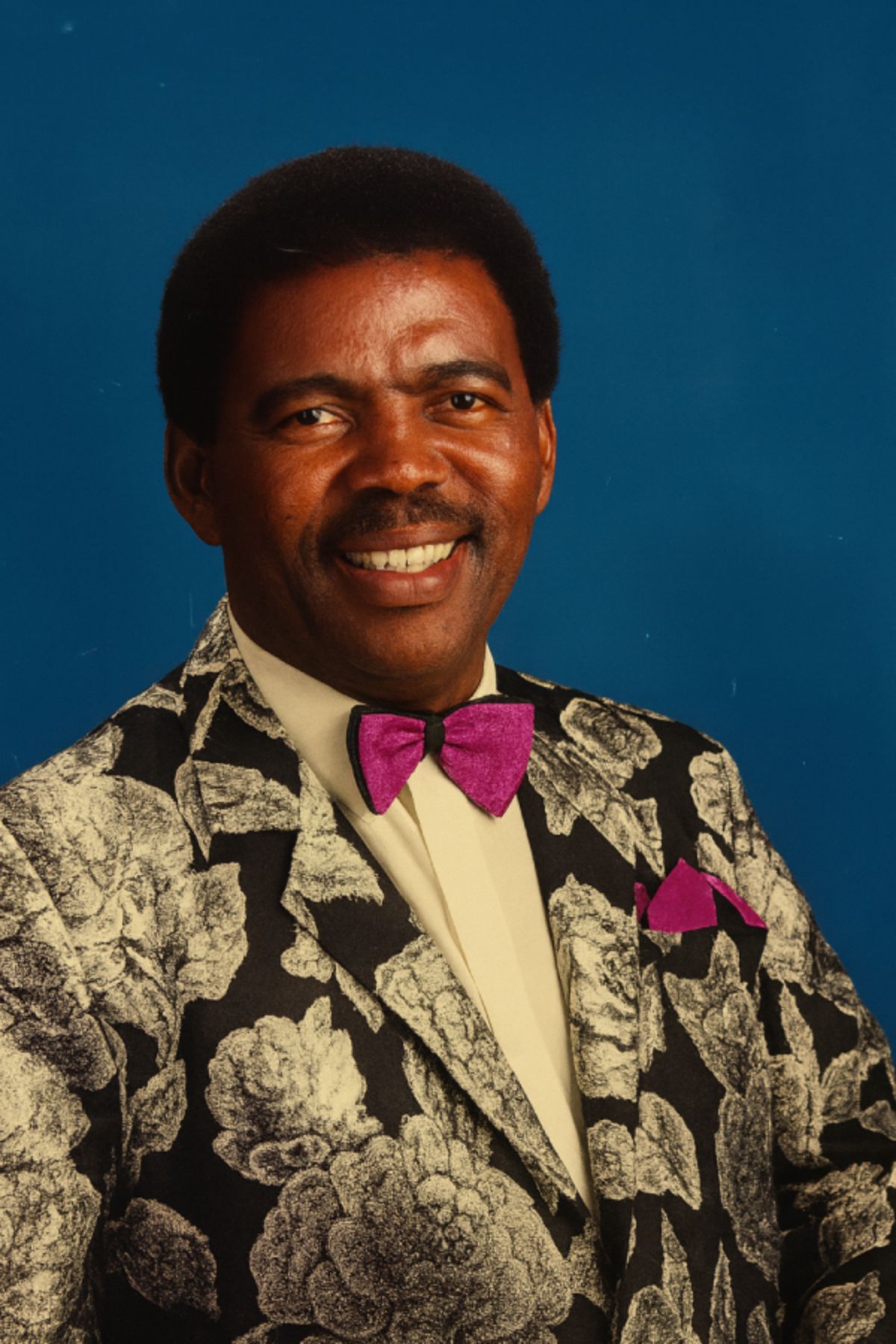
Walter Brown
Walter Brown was born on 7 February 1945 in Goodwood Acres, Cape Town, where his musical talent emerged early through his involvement with the Goodwood Minstrels and the Goodwood Starlights. His potential was recognised at sixteen when he was discovered by a vocal coach, setting the foundation for a career that would span popular music, soul, and later gospel.
His family was forcibly relocated under the Apartheid‑era Group Areas Act, first to Bishop Lavis and later to Matroosfontein in Elsies River. It was in Matroosfontein that his musical development accelerated. In 1961 he formed his first band, The Cyclones, initially as lead vocalist. The group performed at venues such as the Woodstock Hall and in District Six. Recognising the need for their own instruments, Walter taught himself both bass and lead guitar, eventually becoming the band’s lead guitarist.
During this period he met the young Robbie Jansen, beginning a close friendship and musical partnership. Robbie soon joined The Cyclones on stage, and the band went on to win the Battle of the Bands competition. In 1967 Walter and Robbie co‑founded the group that would become one of Cape Town’s most iconic ensembles: The Rockets. Originally named The Bismarks, the band was renamed by Walter. With The Rockets he recorded two singles, Beside You and I Know (Rave, R300, 1967), marking his first commercial recordings. In 1969 he toured nationally with the Golden City Dixies, further expanding his profile.
By the early 1970s Walter embarked on a solo career. He released several singles and, in 1977, the album The Walter Brown Show, which showcased his versatility and stage presence. He toured nationally with leading South African artists including Lionel Petersen, Richard Jon Smith, Jonathan Butler, Ronnie Joyce, Neville Nash, Harari, The Rockets, and The Miracles. His career also extended internationally, with performances in London, Switzerland, Greece, Spain, and Israel. He appeared at the renowned Cape Woodstock festival, cementing his reputation as a dynamic live performer.
In 1980 Walter collaborated with Taliep Petersen to launch Carnival A La District Six at the Royal Swazi Spa in Swaziland, adding theatrical and cultural dimensions to his artistic output.
During the early 1980s he shifted his focus to gospel music, a transition that would define the latter part of his career. He released several gospel singles and, in 1983, the full‑length album Gospel in Africa, composed by Walter and The Rockets’ Molly Baron. That same year he toured with Jonathan Butler and Lionel Petersen, backed by The Rockets. His spiritual journey deepened when he travelled to Israel in 1983 and was baptised in the River Jordan. Upon returning to South Africa, he launched his first Gospel Festival at the Good Hope Centre in Cape Town, drawing large audiences and establishing himself as a respected gospel figure.
Walter later performed in several cities across the United States, sharing his gospel ministry with international audiences and strengthening his reputation as a soulful, expressive vocalist.
He passed away on 18 February 2015, leaving behind a distinguished legacy as one of South Africa’s most versatile and influential performers. His contributions to Cape music—across pop, soul, and gospel—remain deeply valued, and his work continues to be remembered as part of the region’s rich musical heritage.
- 1967 — Beside You · 7" single · Rave R300
- 1967 — I Know · 7" single · Rave R300
- 1977 — The Walter Brown Show · LP
- 1983 — In Africa · 12"
- 1983 — Gospel in Africa · LP · composed with Molly Baron
- 1970–1979 — Burning Fire (1974) & Darling I Love You (1977)
- 1980–1983 — Various gospel singles
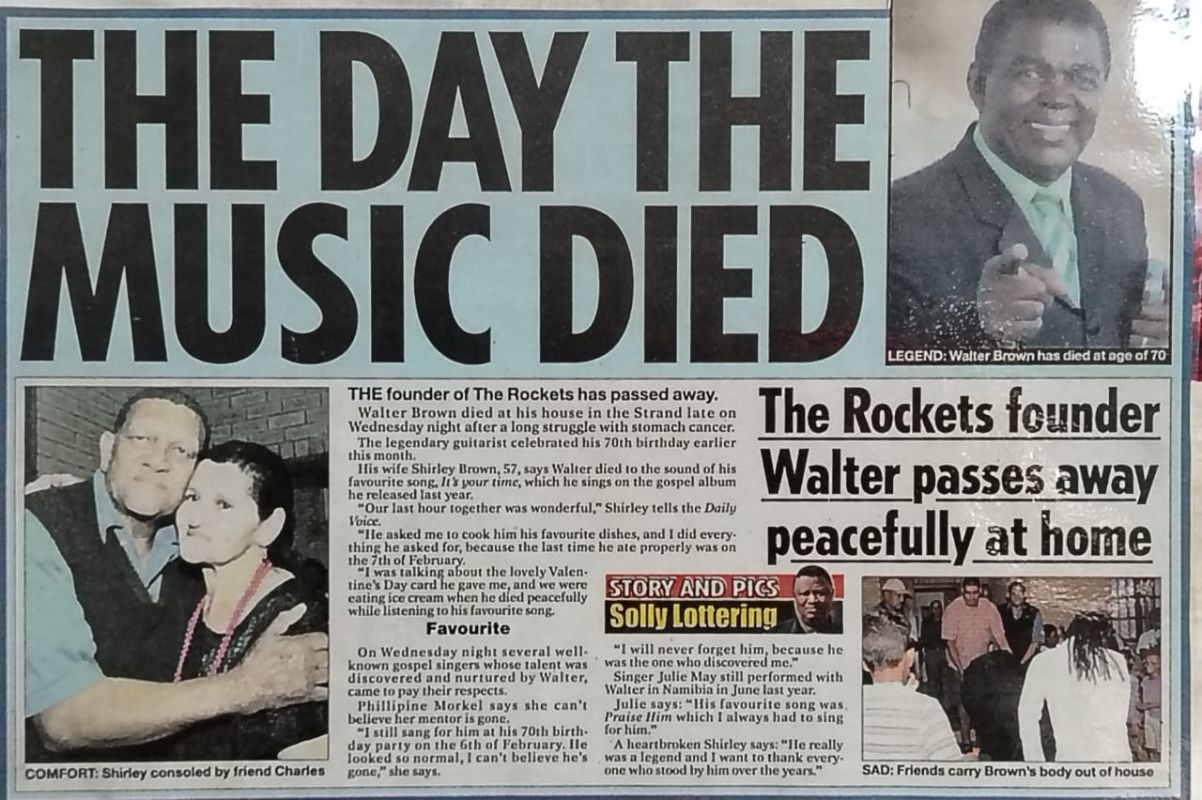
Newspaper clipping 1
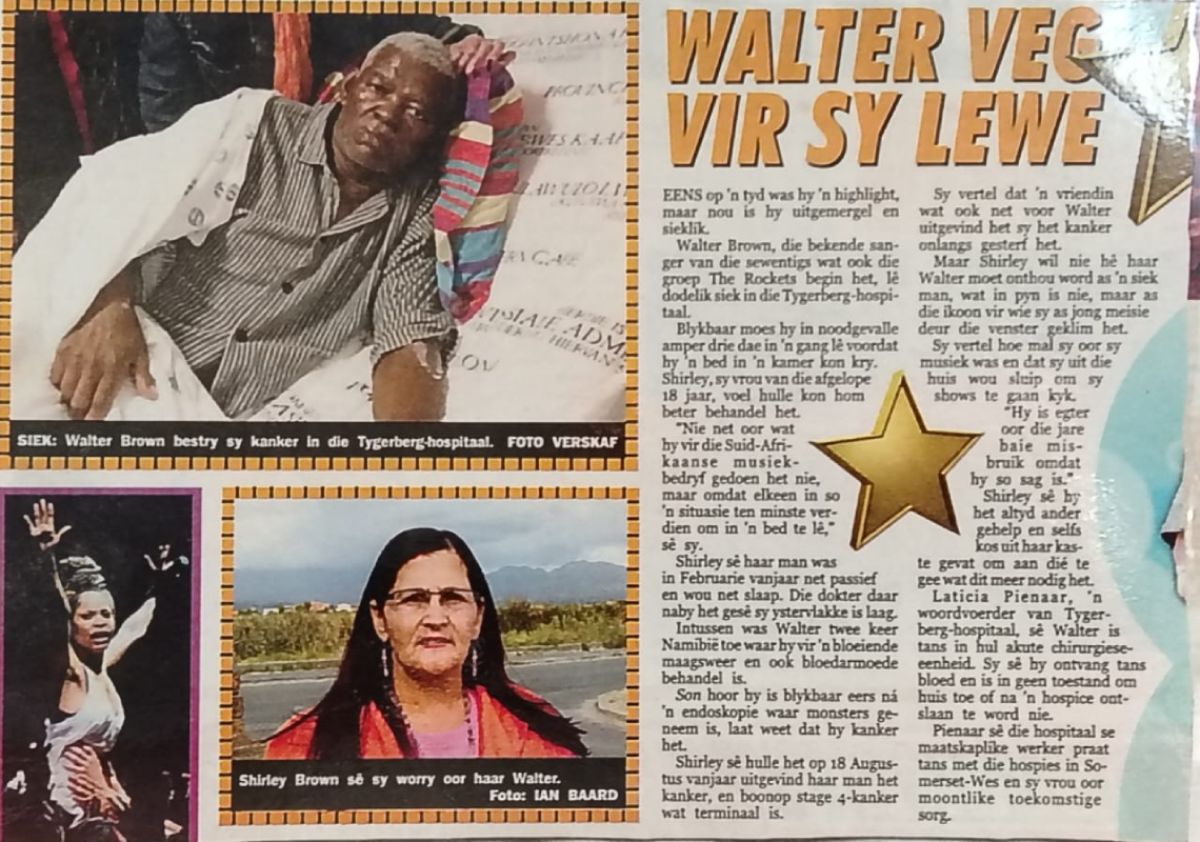
Newspaper clipping 2
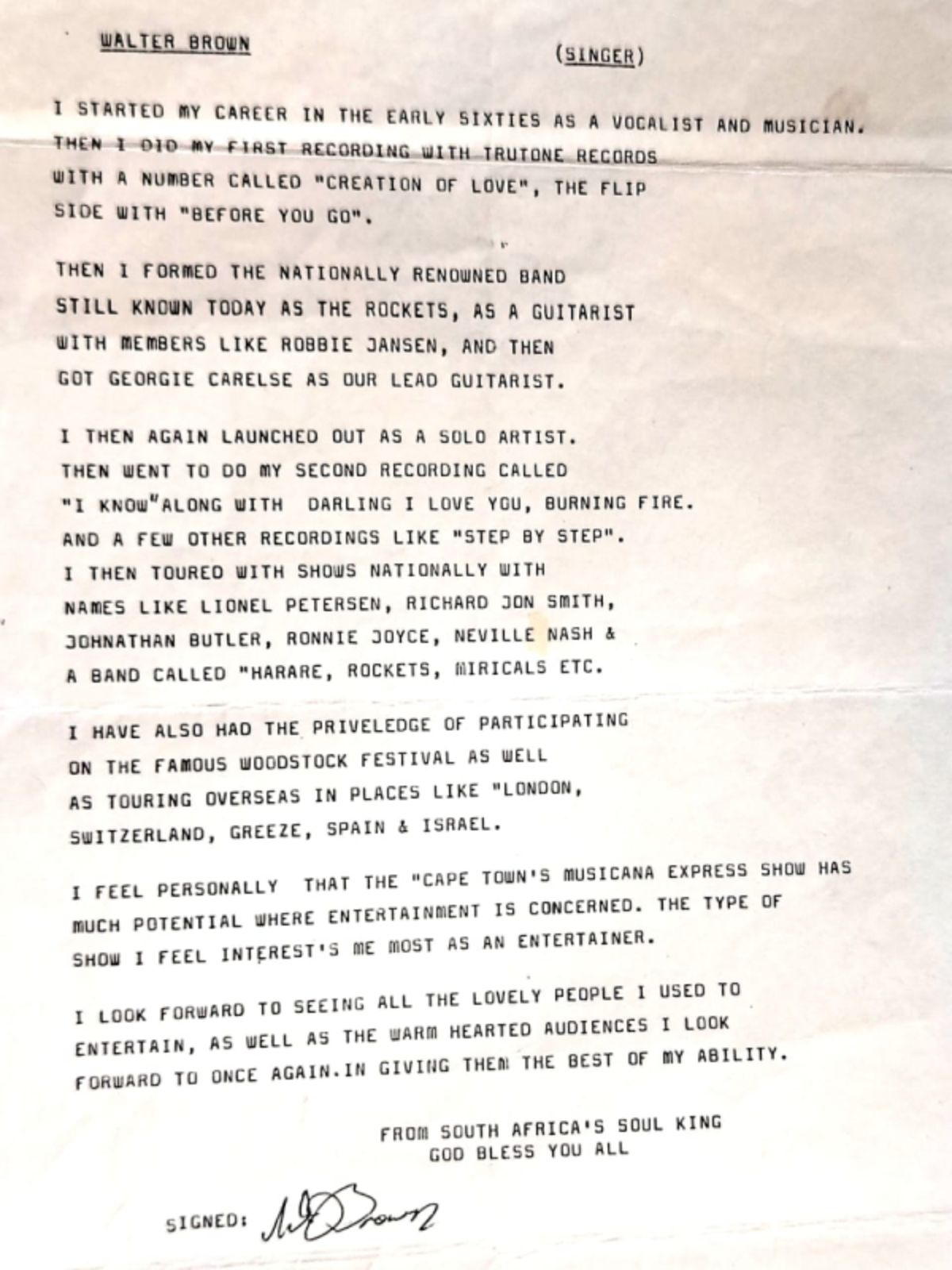
In His Own Words
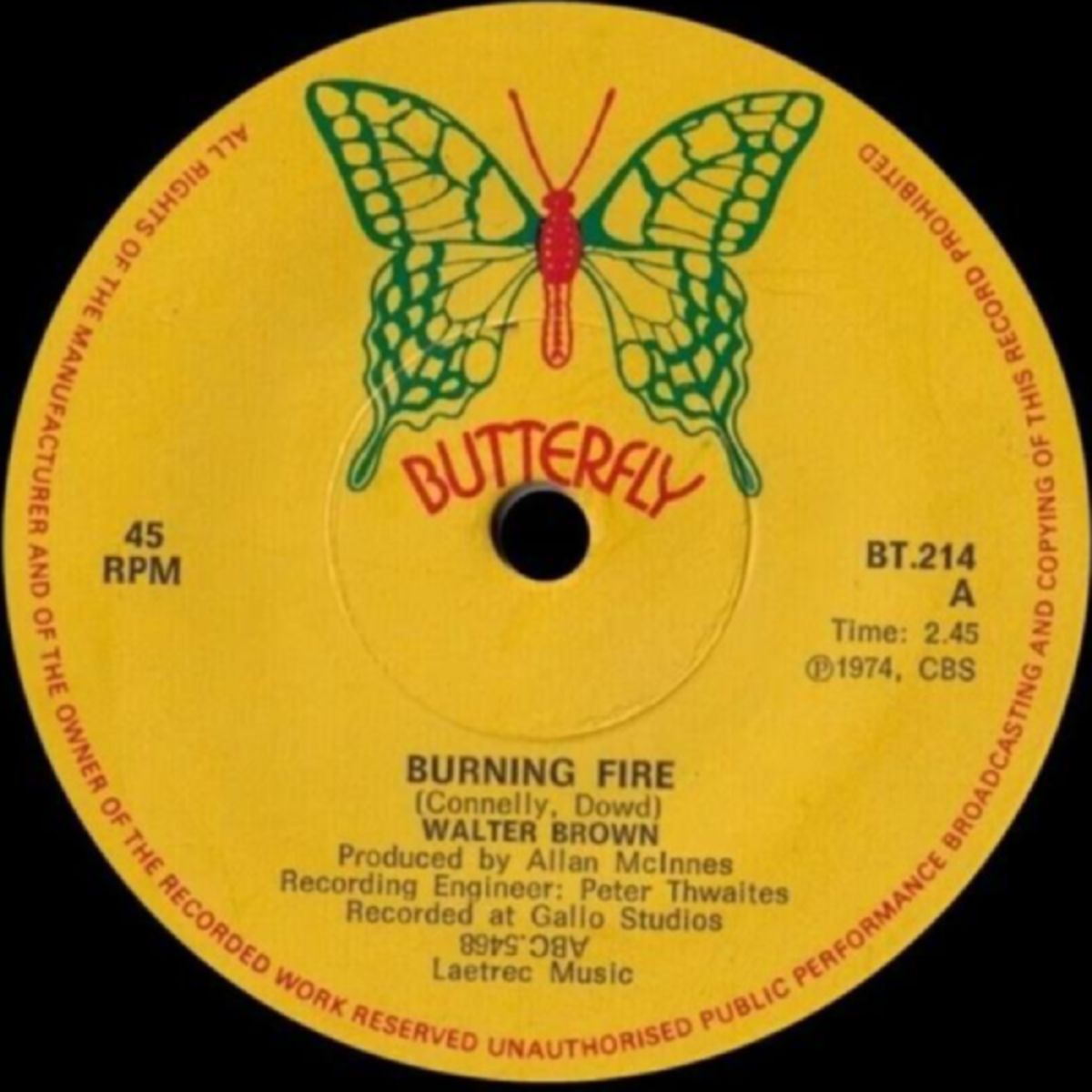
Vinyl record 1
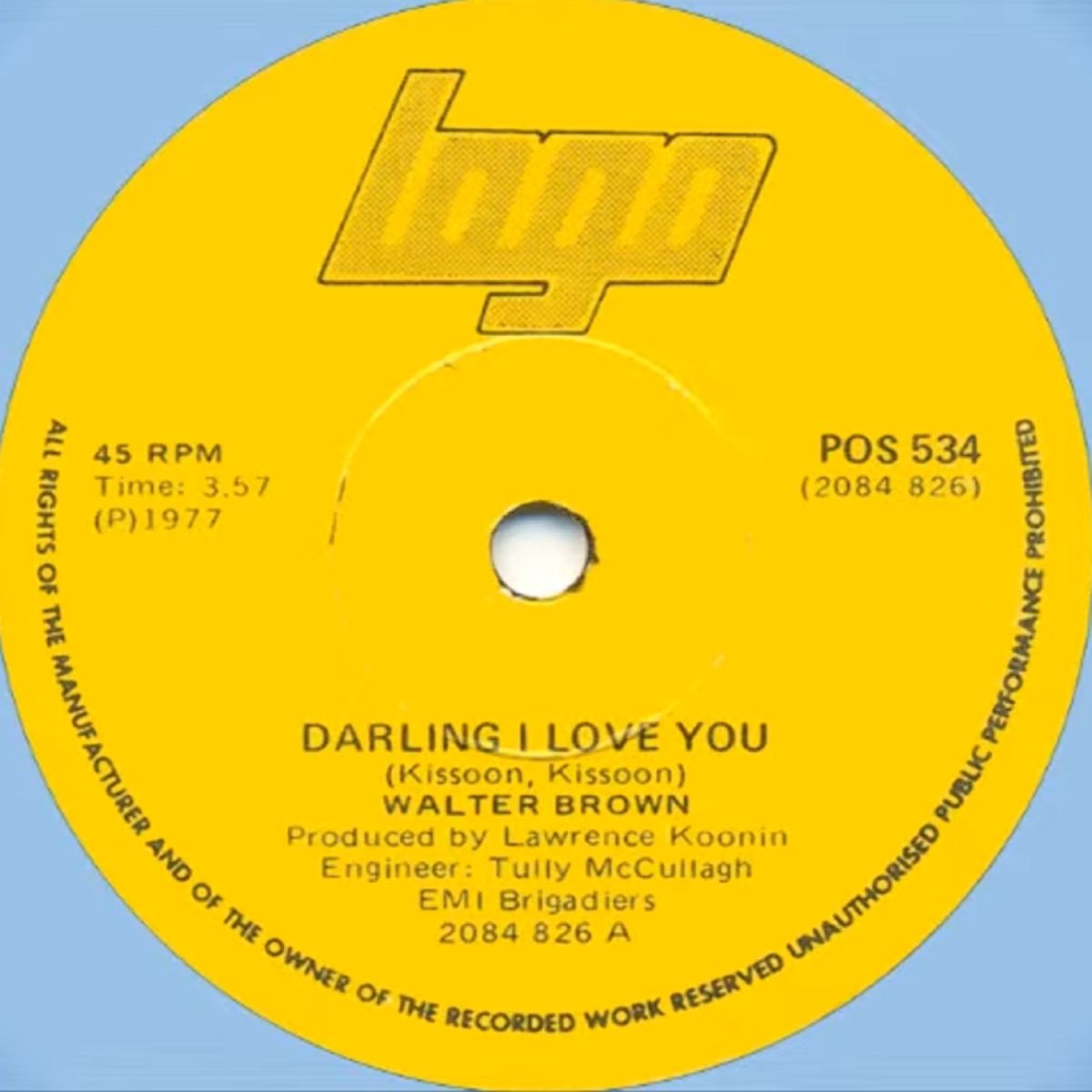
Vinyl record 2